Track days are different.
The track is a better place to learn speed, braking, body position, and judgment — but it is still a motorsports environment with risks. This page explains the practical, legal, and insurance realities before your first day.
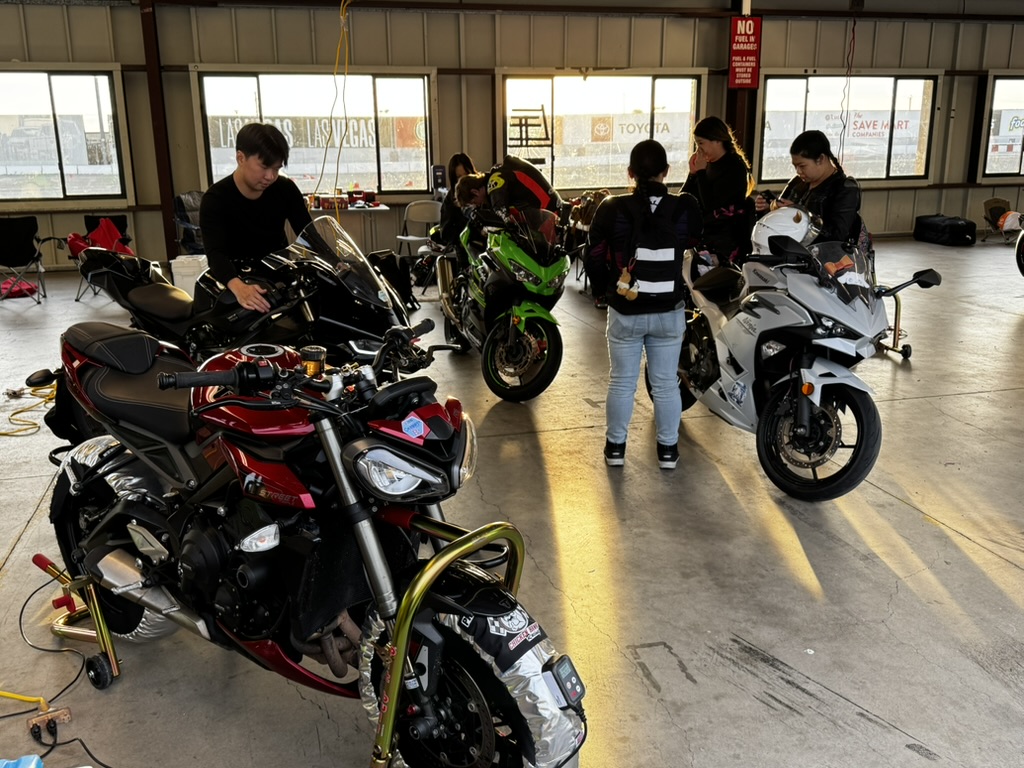
Come prepared. Ride within yourself.
A track day is not a race. It is a controlled riding environment with rules, groups, flags, staff, and runoff. But crashes still happen. Mechanical failures happen. Other riders make mistakes. The track is a safer alternative to the street, but motorcycling can never be perfectly safe. By participating in a track day, you are assuming risks to your own person and your own bike. Other people assume the risks for their own person and their own bike.
The track-day provider and venue will require releases and acknowledgments before you ride.
You should assume you are responsible for your motorcycle, your body, your gear, and your choices.
Motorcycle insurance usually doesn’t cover track days. If your bike gets damaged, you’ll need to fix it out of pocket.
California assumption of risk.
Primary assumption of risk
California recognizes a doctrine often called primary assumption of risk. In plain English: when someone voluntarily participates in a sport or inherently risky recreational activity, the law may treat certain risks as part of the activity itself.
That does not mean “anything goes.” California cases describe a limited duty not to increase the risks beyond those inherent in the activity. But it does mean that ordinary incidents of the activity can be treated very differently from ordinary street accidents.
Waivers and releases
You should expect to sign waivers for the provider and the venue. Those documents matter. Read them. Keep copies.
Waivers are not magic shields for every kind of conduct. California law has limits around fraud, willful injury, violation of law, and future gross negligence. But for ordinary recreational risk and ordinary negligence, waivers can be legally significant.
Assume no coverage unless verified.
Do not assume your normal motorcycle policy covers track use just because the event is non-racing, untimed, instructional, or organized. Policies differ, exclusions change, and claim outcomes can depend on exact wording.
What to expect.
Before event day
- Complete any Guardians intake or event paperwork.
- Read the provider’s gear, bike prep, waiver, and tech rules.
- Make sure your motorcycle is mechanically sound: tires, brakes, chain, throttle, fluid leaks, controls, and safety wiring/taping if required.
- Bring your license/ID, health insurance card, emergency contact info, water, snacks, shade, basic tools, and a way to get the bike home if it breaks.
On event day
- Arrive early. The morning goes fast.
- Check in, sign waivers, pass tech, and attend the rider meeting.
- Ask questions before you go out. Confusion in the paddock is fixable; confusion on track is dangerous.
- Follow flags, passing rules, pit-in/pit-out procedures, and group instructions.
- Ride your own pace. The first win is finishing the day with you and the bike intact.
Know what you are signing up for.
- Knight v. Jewett — California Supreme Court primary assumption of risk decision.
- Nalwa v. Cedar Fair — California Supreme Court application of primary assumption of risk to recreational activities.
- California Civil Code § 1668 — statutory limit on contracts exempting fraud, willful injury, or violation of law.
- City of Santa Barbara v. Superior Court — California Supreme Court decision on future gross negligence waivers.
- Progressive motorcycle insurance overview — describes typical exclusions for races, timed events, speed tests, or track use.